
Resources
Where the science meets the bench. Evidence and real-world applications for ELAREM™ Human Platelet Lysate — from practical guides and published research to case studies, our cell database and other materials such as posters and flyers.
Practical documents to take into the lab
Short, practical PDFs that answer the questions researchers ask first — how Human Platelet Lysate compares to FBS and human serum, which ELAREM™ product fits which workflow, and how the raw material is sourced.
Featured publications
 Featured
Human Platelet Lysate in Microgel Bioreactor Culture
Microgel Culture in Stirred Tank Reactors: Effects on Extracellular Vesicle Secretion and Mesenchymal Stem Cell Function.García-Aponte et al. 2026Culturing umbilical cord MSCs as microgels in stirred tank reactors, this study examined effects on extracellular vesicle secretion and cell function using Human Platelet Lysate (HPL) and heparin from PL BioScience.Read the article Featured
Human Platelet Lysate in iPSC-NK Workflows
Validated GMP banking of a new set of genomically stable induced pluripotent stem cell lines using single-cell passaging.Hiller et al. 2026This study validated GMP-compliant iPSC master cell banks and their downstream differentiation into NK cells, using DF12 medium supplemented with 15% Human Platelet Lysate (HPL) from PL BioScience in the terminal step.Read the article Featured
PL BioScience HPL in Human Cancer Cell Culture
Phenotypic transformation of HCC827 cells revealed by evaluation of human platelet lysate as a sustainable fetal bovine serum replacement.Woitaske-Proske et al. 2026In a comparison with fetal bovine serum, 10% Human Platelet Lysate (HPL) from PL BioScience reshaped HCC827 lung cancer cell morphology, actin organization and signaling without triggering canonical EMT.Read the article Featured
Human Platelet Lysate in MSC Potency Testing
HLA-DR modulation and PD-1/PD-L2 checkpoint signalling define a mechanistic potency axis for mesenchymal stromal cell immunosuppression.Zarif et al. 2026This preprint establishes a standardized mixed lymphocyte reaction platform to evaluate MSC immunosuppressive potency, using MSCs cultured with 5% Human Platelet Lysate (HPL) from PL BioScience before testing.Read the articleFeaturedELAREM™ in Bone Implant Surface Research
Enhancing Poly-ε-Caprolactone Implant Performance: Synergistic Surface Modifications With Osteon-Like Microstructure, Cold Atmospheric Plasma, and Extracellular Matrix Coating.Vostatek et al. 2026This study tested surface-modified poly-ε-caprolactone implants and their effect on hMSC attachment and osteogenic differentiation, using ELAREM™ fibrinogen-depleted Human Platelet Lysate (HPL) in the culture workflow.Read the articleFeaturedHuman-Derived Culture Support for HSV-1 Cell Entry Research
Calcium Spirulan from Arthrospira platensis (Spirulina) Prevents Herpes simplex Virus Type I Cell Entry in vitro.Elyorgun et al. 2026Calcium spirulan from Spirulina blocked HSV-1 cell entry into human keratinocytes. The antiviral effect stems from calcium spirulan; the cell model was maintained with Human Platelet Lysate (HPL) from PL BioScience.Read the articleFeaturedHuman Platelet Lysate in MSC-EV Manufacturing
Production and Purification of Mesenchymal Stem Cell-Derived Extracellular Vesicles Using Preferential Exclusion Chromatography.Vrabec et al. 2026This study developed a scalable MSC-derived extracellular vesicle production workflow, expanding MSCs in medium with 2.5% Human Platelet Lysate (HPL) from PL BioScience before switching to EV production medium.Read the articleFeaturedHuman Platelet Lysate for Vascular Cell Differentiation
Human platelet lysate drives clinically compliant generation of vascular mural cells from human pluripotent stem cells.González-Teshima et al. 2026In this preprint, Human Platelet Lysate (HPL) supported differentiation of pluripotent stem cells into vascular mural cells; 1% HPL performed comparably to 10% fetal bovine serum, with concentration shaping cell fate.Read the articleFeaturedHuman Platelet Lysate in Vascular Cell Culture
Adipose-derived dual cell therapy enhances arteriogenesis and limb preservation through vascular integration in critical limb ischemia.Kim et al. 2026In this study on a dual-cell therapy for critical limb ischemia, vascular multipotent stem cells were expanded using 2% Human Platelet Lysate (HPL) from PL BioScience before combination with adipose-derived stem cells.Read the articleFeaturedELAREM™ in CAR-T Manufacturing
Multi-omic profiling and preclinical efficacy of fratricide-driven, unedited CD7 CAR-T cells in T-cell leukemia.Freile et al. 2026Manufacturing unedited CD7 CAR-T cells is challenged by fratricide. ELAREM™, PL BioScience's Human Platelet Lysate (HPL), supported the optimized expansion workflow used in this study, aiding expansion and viability.Read the articleFeaturedHuman Platelet Lysate in Juvenile MSC Culture
Establishment and characterization of a human juvenile bone marrow-derived mesenchymal stem/stromal cell line under advanced culture conditions for osteogenic differentiation.Moldaschl et al. 2026This study characterized a human juvenile bone marrow-derived MSC line for osteogenic differentiation research, expanded using 2.5% fibrinogen-depleted Human Platelet Lysate (HPL) and heparin from PL BioScience.Read the articleAll featured publications

Human Platelet Lysate in Microgel Bioreactor Culture
Culturing umbilical cord MSCs as microgels in stirred tank reactors, this study examined effects on extracellular vesicle secretion and cell function using Human Platelet Lysate (HPL) and heparin from PL BioScience.Read the article
Human Platelet Lysate in iPSC-NK Workflows
This study validated GMP-compliant iPSC master cell banks and their downstream differentiation into NK cells, using DF12 medium supplemented with 15% Human Platelet Lysate (HPL) from PL BioScience in the terminal step.Read the article
PL BioScience HPL in Human Cancer Cell Culture
In a comparison with fetal bovine serum, 10% Human Platelet Lysate (HPL) from PL BioScience reshaped HCC827 lung cancer cell morphology, actin organization and signaling without triggering canonical EMT.Read the article
Human Platelet Lysate in MSC Potency Testing
This preprint establishes a standardized mixed lymphocyte reaction platform to evaluate MSC immunosuppressive potency, using MSCs cultured with 5% Human Platelet Lysate (HPL) from PL BioScience before testing.Read the articleELAREM™ in Bone Implant Surface Research
This study tested surface-modified poly-ε-caprolactone implants and their effect on hMSC attachment and osteogenic differentiation, using ELAREM™ fibrinogen-depleted Human Platelet Lysate (HPL) in the culture workflow.Read the articleHuman-Derived Culture Support for HSV-1 Cell Entry Research
Calcium spirulan from Spirulina blocked HSV-1 cell entry into human keratinocytes. The antiviral effect stems from calcium spirulan; the cell model was maintained with Human Platelet Lysate (HPL) from PL BioScience.Read the articleHuman Platelet Lysate in MSC-EV Manufacturing
This study developed a scalable MSC-derived extracellular vesicle production workflow, expanding MSCs in medium with 2.5% Human Platelet Lysate (HPL) from PL BioScience before switching to EV production medium.Read the articleHuman Platelet Lysate for Vascular Cell Differentiation
In this preprint, Human Platelet Lysate (HPL) supported differentiation of pluripotent stem cells into vascular mural cells; 1% HPL performed comparably to 10% fetal bovine serum, with concentration shaping cell fate.Read the articleHuman Platelet Lysate in Vascular Cell Culture
In this study on a dual-cell therapy for critical limb ischemia, vascular multipotent stem cells were expanded using 2% Human Platelet Lysate (HPL) from PL BioScience before combination with adipose-derived stem cells.Read the articleELAREM™ in CAR-T Manufacturing
Manufacturing unedited CD7 CAR-T cells is challenged by fratricide. ELAREM™, PL BioScience's Human Platelet Lysate (HPL), supported the optimized expansion workflow used in this study, aiding expansion and viability.Read the articleHuman Platelet Lysate in Juvenile MSC Culture
This study characterized a human juvenile bone marrow-derived MSC line for osteogenic differentiation research, expanded using 2.5% fibrinogen-depleted Human Platelet Lysate (HPL) and heparin from PL BioScience.Read the articlePublished evidence, gathered in one list
Peer-reviewed work built on ELAREM™ Human Platelet Lysate: 72 papers from research groups working with our products, plus our own publications. Newest first, each entry links straight to the journal.
How specific labs put ELAREM™ to work
Where an Application Note documents a protocol and a publication documents a peer-reviewed result, a case study tells the story behind both — who the research group is, what problem they were solving, and what changed once they switched to ELAREM™.
A research group has run multiple musculoskeletal bioengineering projects using organ-on-a-chip and organoid technologies designed to be fully animal-free — with ELAREM™ as the serum surrogate for primary human cells.
“Since 2019, we have initiated many musculoskeletal bioengineering projects using organ-on-a-chip and organoid technologies that aim to be animal-free. ELAREM™ as serum surrogate is ideally suited to provide primary human cells an animal-free environment to proliferate without any performance losses. My research group supports the use of serum substitutes such as ELAREM™ and we won’t ever go back to conventional FBS-based in vitro cultures.”
Dr. Mario Rothbauer · Research Group Leader, Orthopedic Microsystems Unit, Karl Chiari Lab for Orthopaedic Biology, Medical University of Vienna
A hospital cell manufacturing unit produces its investigational ATMP — human mesenchymal stromal cells — with GMP-grade ELAREM™ Perform-FD PLUS, EU origin included for compliance with the European Pharmacopoeia.
“At OUH-CELL-BENCH, we have been manufacturing our investigational ATMP product, ADRC001 (human mesenchymal stromal cells), using GMP-grade ELAREM Perform-FD Plus from PL BioScience for more than a year. We have found this ready-to-use hPL product to support cell growth exceptionally well, and we are particularly satisfied with its EU origin, which ensures full compliance with the European Pharmacopoeia.”
Ditte Caroline Andersen · Professor in Cardiovascular Regeneration, Odense University Hospital / University of Southern Denmark
Check your cell type before you start
A curated overview of cell types successfully cultivated with Human Platelet Lysate, gathered from published research and customer feedback. Useful as a first check: has anyone already cultivated my cell type with ELAREM™? Delivered as a single PDF.
Enter your email to unlock the download. We only use it to follow up on your request — see our privacy policy.
Download Cell Database (PDF)Other materials
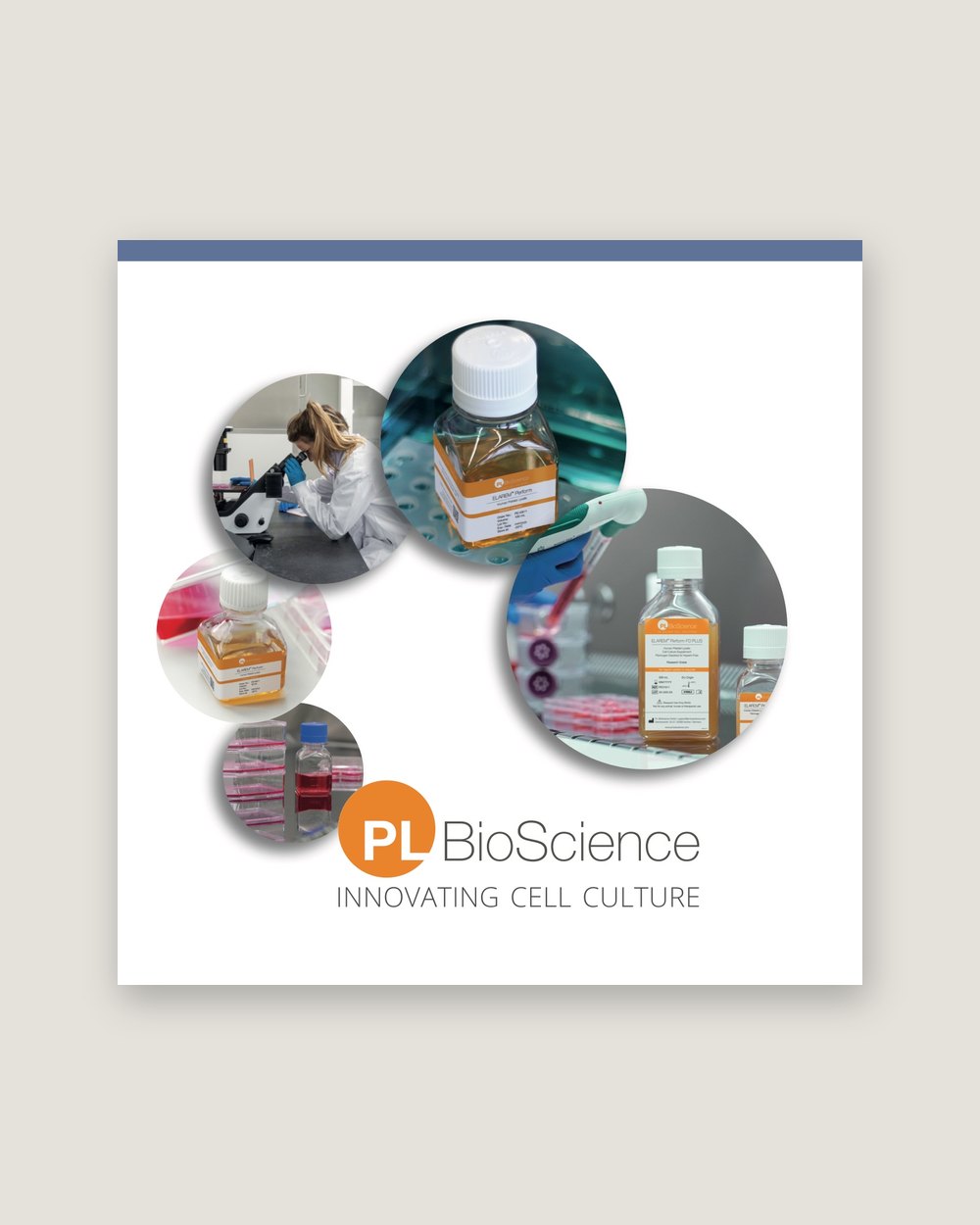
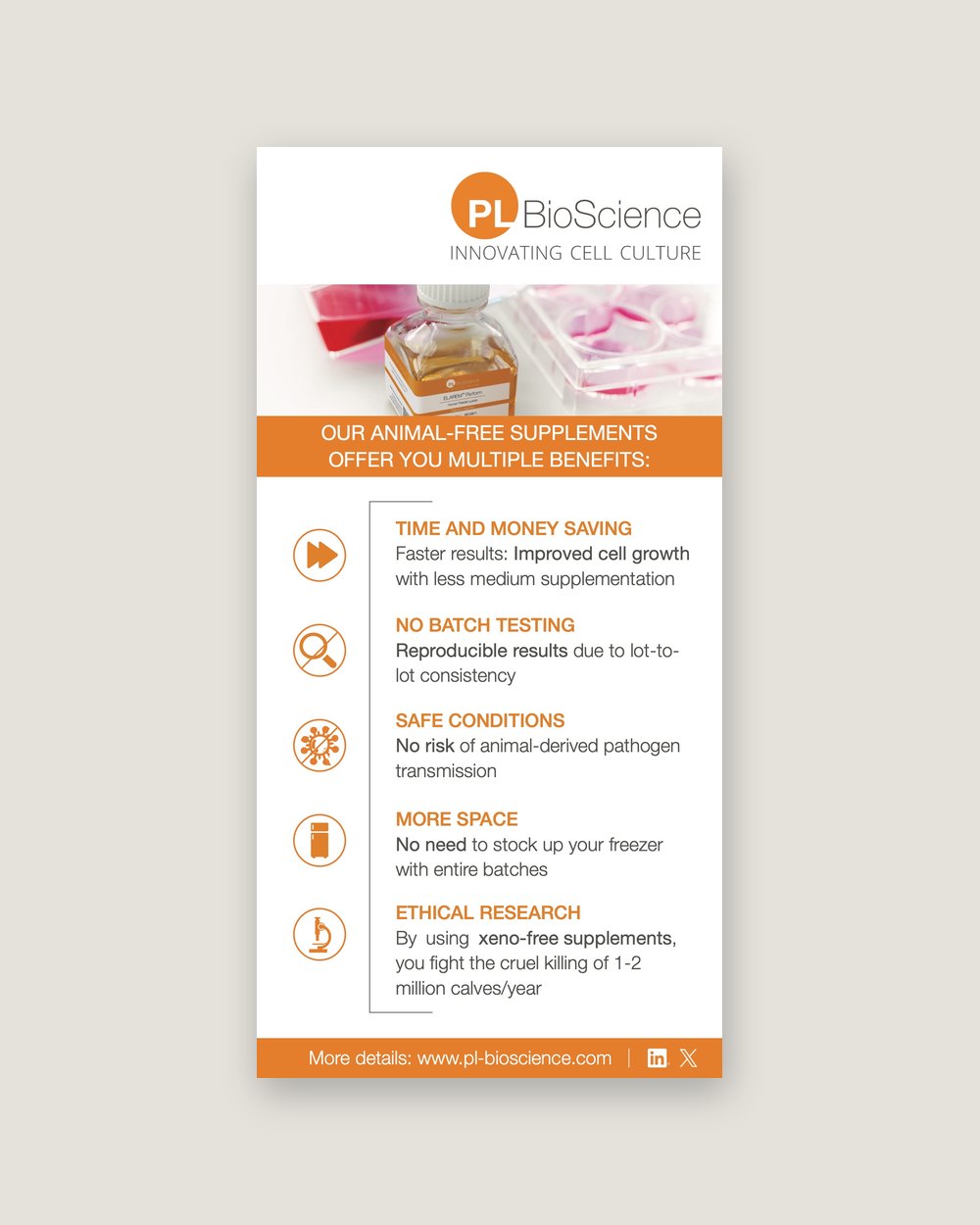
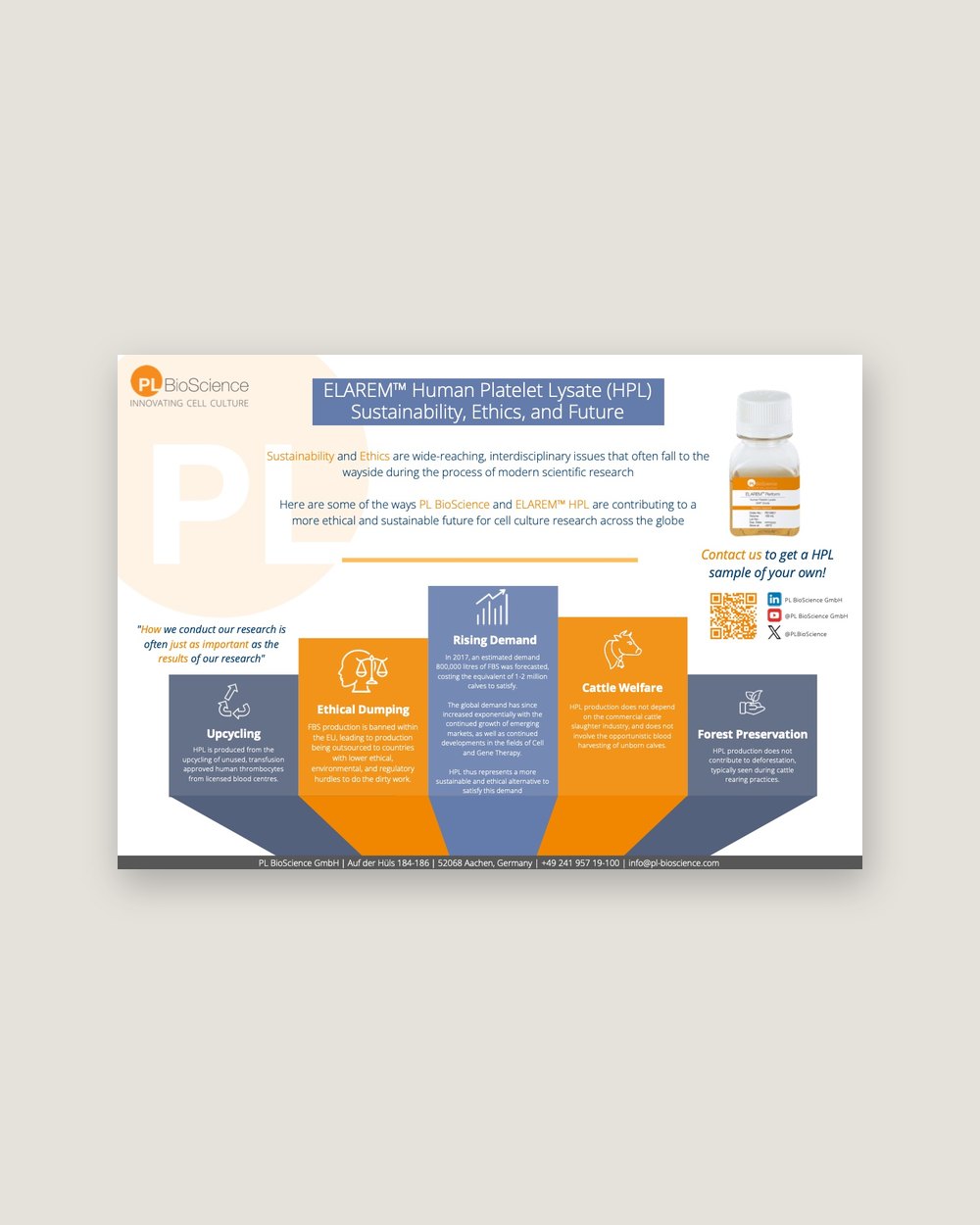
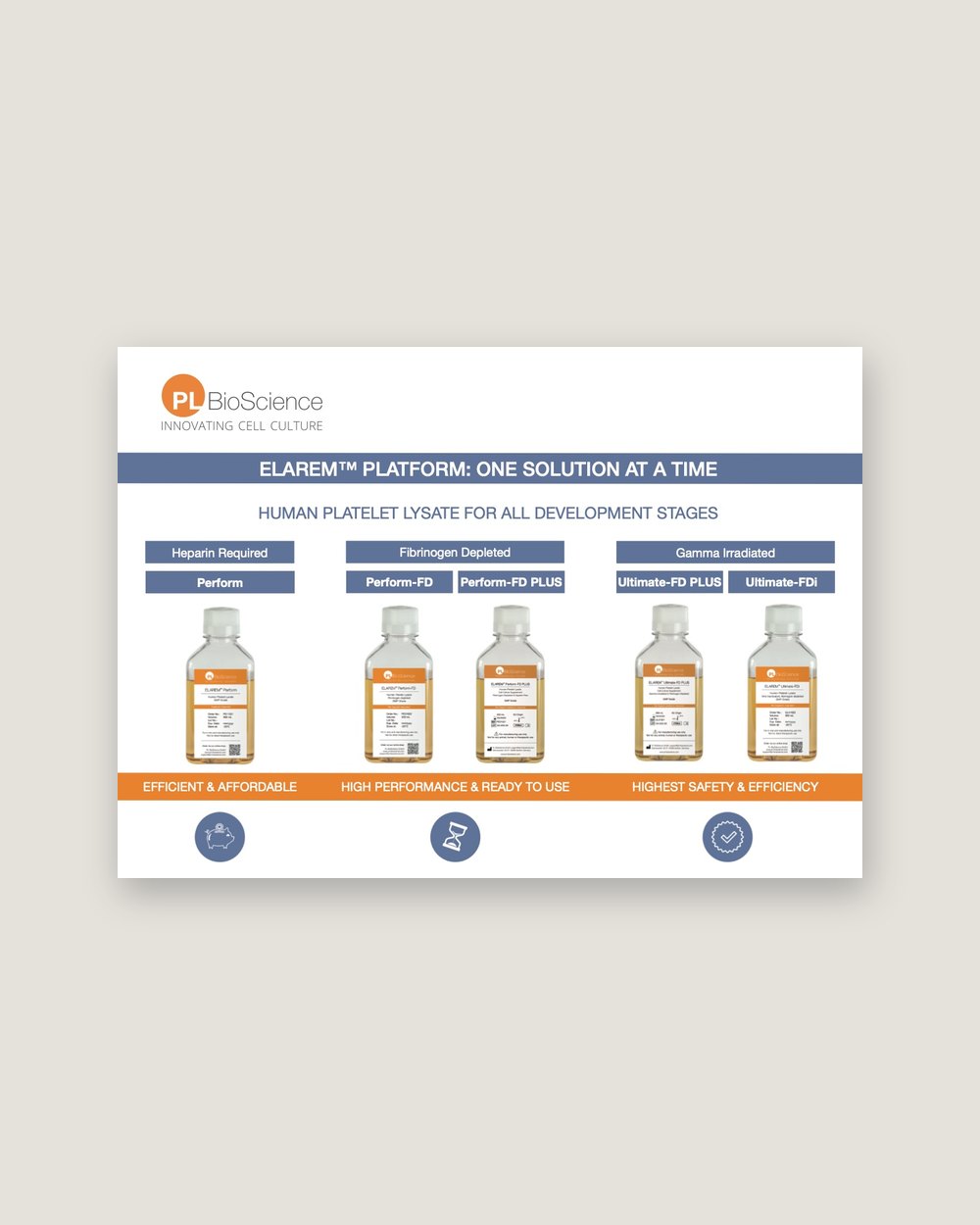
Conference posters, flyers and other material around ELAREM™ Human Platelet Lysate. Open any item for a closer look and download the file you need.
Not sure which resource fits your cell type
Our technical team can point you to the right Application Note, publication or case study for your specific workflow — no sales pitch required.